Sideway
output.to from Sideway
`-=[]โŸจโŸฉ\;',./~!@#$%^&*()_+{}|:"<>? ๐‘Ž๐‘๐‘๐‘‘๐‘’๐‘“๐‘”โ„Ž๐‘–๐‘—๐‘˜๐‘™๐‘š๐‘›๐‘œ๐‘๐‘ž๐‘Ÿ๐‘ ๐‘ก๐‘ข๐‘ฃ๐‘ค๐‘ฅ๐‘ฆ๐‘ง ร…โ€‰โˆ’โ€‚ร—โ€ƒโ‹…โˆ“ยฑโˆ˜๊žŠ๏นฆโˆ—โˆ™ โ„ฏ ๐”ธ๐”นโ„‚๐”ป๐”ผ๐”ฝ๐”พโ„๐•€๐•๐•‚๐•ƒ๐•„โ„•๐•†โ„™โ„šโ„๐•Š๐•‹๐•Œ๐•๐•Ž๐•๐•โ„ค๐ด๐ต๐ถ๐ท๐ธ๐น๐บ๐ป๐ผ๐ฝ๐พ๐ฟ๐‘€๐‘๐‘‚๐‘ƒ๐‘„๐‘…๐‘†๐‘‡๐‘ˆ๐‘‰๐‘Š๐‘‹๐‘Œ๐‘ โˆผโˆฝโˆพโ‰โ‰‚โ‰ƒโ‰„โ‰…โ‰†โ‰‡โ‰ˆโ‰‰โ‰Œโ‰โ‰ โ‰ก โ‰คโ‰ฅโ‰ฆโ‰งโ‰จโ‰ฉโ‰ชโ‰ซ โˆˆโˆ‰โˆŠโˆ‹โˆŒโˆ โŠ‚โŠƒโŠ„โŠ…โІโЇ ๐›ผ๐›ฝ๐›พ๐›ฟ๐œ€๐œ๐œ‚๐œƒ๐œ„๐œ…๐œ†๐œ‡๐œˆ๐œ‰๐œŠ๐œ‹๐œŒ๐œŽ๐œ๐œ๐œ‘๐œ’๐œ“๐œ” โˆ€โˆ‚โˆƒโˆ…โฆฐโˆ†โˆ‡โˆŽโˆžโˆโˆดโˆต โˆโˆโˆ‘โ‹€โ‹โ‹‚โ‹ƒ โˆงโˆจโˆฉโˆช โˆซโˆฌโˆญโˆฎโˆฏโˆฐโˆฑโˆฒโˆณ โˆฅโ‹ฎโ‹ฏโ‹ฐโ‹ฑ โ€– โ€ฒ โ€ณ โ€ด โ„ โ— สน สบ โ€ต โ€ถ โ€ท ๏น ๏น‚ ๏นƒ ๏น„ ๏ธน ๏ธบ ๏ธป ๏ธผ ๏ธ— ๏ธ˜ ๏ธฟ ๏น€ ๏ธฝ ๏ธพ ๏น‡ ๏นˆ ๏ธท ๏ธธ โœ   โ   โŽด  โŽต  โž   โŸ   โ    โก โ†โ†‘โ†’โ†“โ†คโ†ฆโ†ฅโ†งโ†”โ†•โ†–โ†—โ†˜โ†™โ–ฒโ–ผโ—€โ–ถโ†บโ†ปโŸฒโŸณ โ†ผโ†ฝโ†พโ†ฟโ‡€โ‡โ‡‚โ‡ƒโ‡„โ‡…โ‡†โ‡‡ โ‡โ‡‘โ‡’โ‡“โ‡”โ‡Œโ‡โ‡โ‡•โ‡–โ‡—โ‡˜โ‡™โ‡™โ‡ณโฅขโฅฃโฅคโฅฅโฅฆโฅงโฅจโฅฉโฅชโฅซโฅฌโฅญโฅฎโฅฏ
Draft for Information Only

Content

Python Object
โ€ƒPython Object Property
โ€ƒโ€ƒIdentity Property
โ€ƒโ€ƒType Property
โ€ƒโ€ƒValue Property
โ€ƒPython Object Data Types
โ€ƒโ€ƒImmutable Data Types
โ€ƒโ€ƒโ€ƒNumeric Data Types
โ€ƒโ€ƒโ€ƒโ€ƒBooleans
โ€ƒโ€ƒโ€ƒโ€ƒIntegers
โ€ƒโ€ƒโ€ƒโ€ƒFloats
โ€ƒโ€ƒโ€ƒโ€ƒComplex Numbers
โ€ƒโ€ƒโ€ƒโ€ƒFractions
โ€ƒโ€ƒโ€ƒโ€ƒDecimals
โ€ƒโ€ƒโ€ƒStrings
โ€ƒโ€ƒโ€ƒโ€ƒUnicode String
โ€ƒโ€ƒโ€ƒBytes
โ€ƒโ€ƒโ€ƒFrozen Sets
โ€ƒโ€ƒโ€ƒTuples
โ€ƒโ€ƒMutable Data Types
โ€ƒโ€ƒโ€ƒLists
โ€ƒโ€ƒโ€ƒByte Arrays
โ€ƒโ€ƒโ€ƒSets
โ€ƒโ€ƒโ€ƒDictionaries
โ€ƒSource and Reference

Python Object

Python object is a logical representation used to represent the physical data stored in memory.
Objects are never explicitly destroyed; however, when they become unreachable they may be garbage-collected. An implementation is allowed to postpone garbage collection or omit it altogether -- it is a matter of implementation quality how garbage collection is implemented, as long as no objects are collected that are still reachable. (Implementation note: the current implementation uses a reference-counting scheme which collects most objects as soon as they become unreachable, but never collects garbage containing circular references.)

Note that the use of the implementation's tracing or debugging facilities may keep objects alive that would normally be collectable. Also note that catching an exception with a `try...except' statement may keep objects alive.

Some objects contain references to ``external'' resources such as open files or windows. It is understood that these resources are freed when the object is garbage-collected, but since garbage collection is not guaranteed to happen, such objects also provide an explicit way to release the external resource, usually a close() method. Programs are strongly recommended to explicitly close such objects. The `try...finally' statement provides a convenient way to do this.

Python Object Property

The three basic properties of Python object are identity, type, and value.

Identity Property

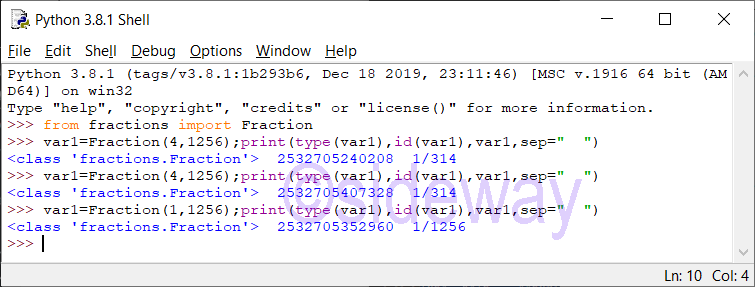
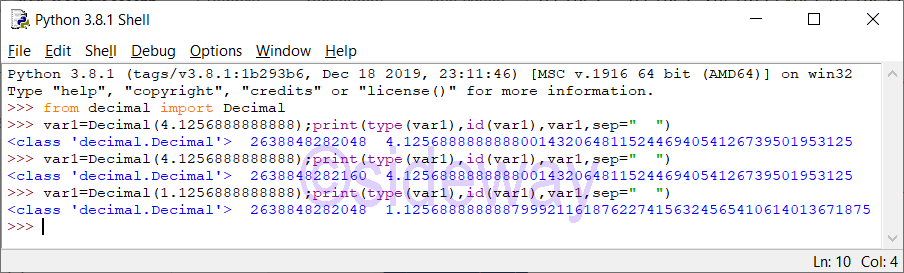
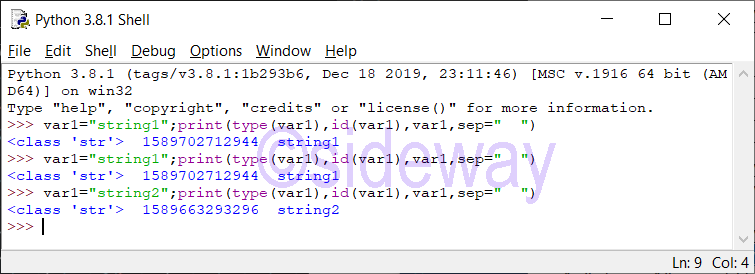
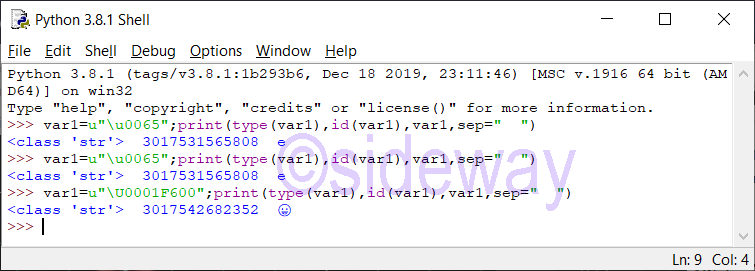
Identity is an unique integer value used to represent a Python object. Since the identity of an object also represents the logical physical location of the corresponding object value, the identity of a Python object remains unchange once the identity has been created. The identity property of a Python object can be returned by the id() function.

Type Property

Type is a predefined type name of the stored data value. Type is used to specify the allowed data type that can be stored in the object and operations that are supported by object type. The type of a Python object remains unchange once the data type are specified. The type property of a Python object can be returned by the type() function.
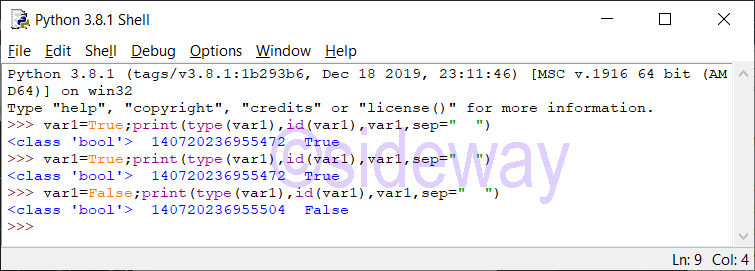
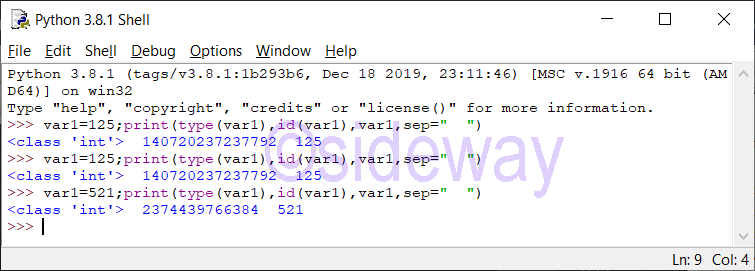
Types affect almost all aspects of object behavior. Even the importance of object identity is affected in some sense: for immutable types, operations that compute new values may actually return a reference to any existing object with the same type and value, while for mutable objects this is not allowed. E.g., after "a = 1; b = 1", a and b may or may not refer to the same object with the value one, depending on the implementation, but after "c = []; d = []", c and d are guaranteed to refer to two different, unique, newly created empty lists. (Note that "c = d = []" assigns the same object to both c and d.) 

Value Property

Value is the logical value of an object. Depending on the Python type property, the Python value property can be divived into two catalogues, mutable and immutable according to the immutability of data object.

Python Object Data Types

Python object data types can be divived into two catalogues, mutable and immutable object data types according to the immutability of data type.

Immutable Data Types

Value of immutable data types can not be changed after creation. Typical immutable types are numeric data types, strings, bytes, frozen sets, and tuples.

Numeric Data Types

Booleans
image
Integers
image
Floats
image
Complex Numbers
image
Fractions
image
Decimals
image

Strings

image
Unicode String
image

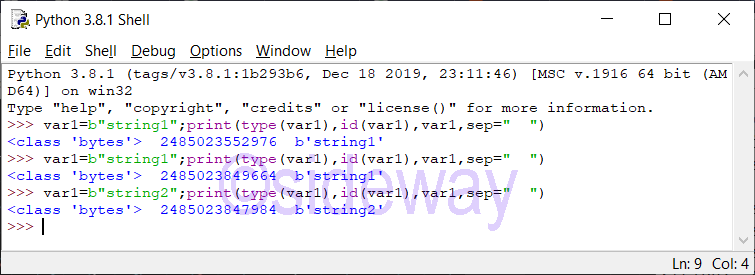
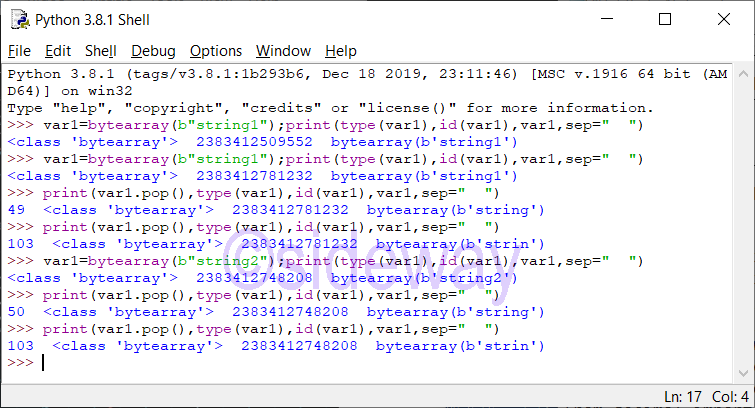
Bytes

image

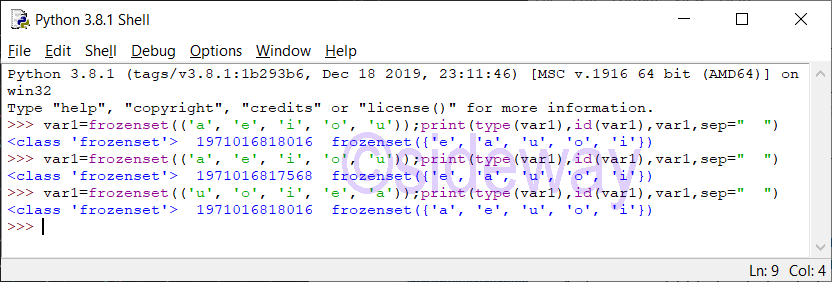
Frozen Sets

image

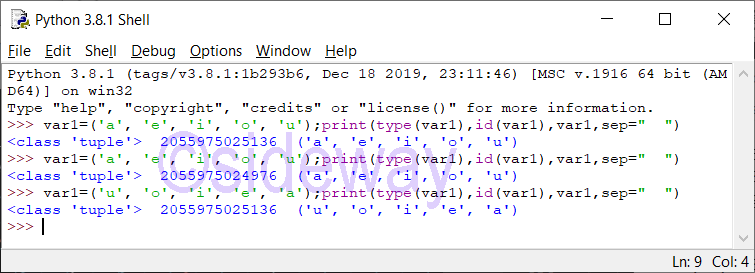
Tuples

image

Mutable Data Types

Value of mutable data types can be changed after creation. Typical mutable types are lists, byte arrays, sets, and dictionaries. These are mutable sequence.

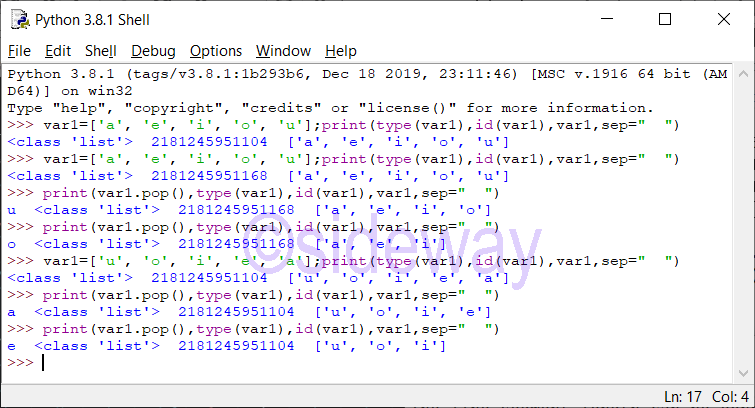
Lists

image

Byte Arrays

image

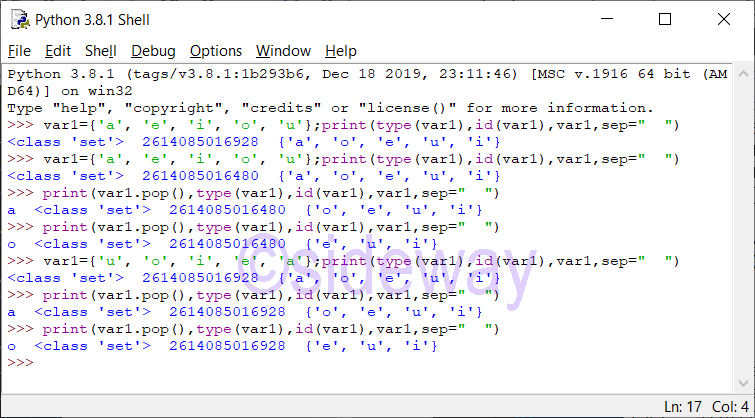
Sets

image

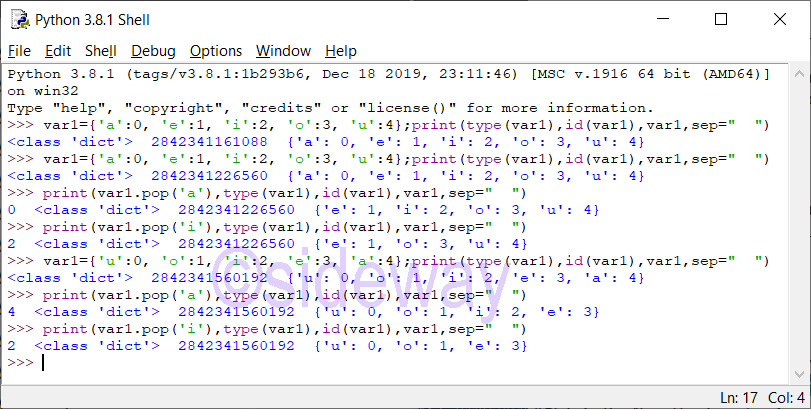
Dictionaries

image

Source and Reference


ยฉsideway

ID: 200500702 Last Updated: 5/7/2020 Revision: 0


Latest Updated LinksValid XHTML 1.0 Transitional Valid CSS!Nu Html Checker Firefox53 Chromena IExplorerna
IMAGE

Home 5

Business

Management

HBR 3

Information

Recreation

Hobbies 9

Culture

Chinese 1097

English 339

Travel 38

Reference 79

Hardware 55

Computer

Hardware 259

Software

Application 213

Digitization 37

Latex 52

Manim 205

KB 1

Numeric 19

Programming

Web 290new

Unicode 504

HTML 66new

Common Color 1new

Html Entity (Unicode) 1new

Html 401 Special 1

CSS 65new

Selector 1

SVG 46

ASP.NET 270

OS 447new

MS Windows

Windows10 1new

.NET Framework 1

DeskTop 7

Python 72

Knowledge

Mathematics

Formulas 8

Set 1

Logic 1

Algebra 84

Number Theory 207new

Trigonometry 31

Geometry 34

Coordinate Geometry 2

Calculus 67

Complex Analysis 21

Engineering

Tables 8

Mechanical

Mechanics 1

Rigid Bodies

Statics 92

Dynamics 37

Fluid 5

Fluid Kinematics 5

Control

Process Control 1

Acoustics 19

FiniteElement 2

Natural Sciences

Matter 1

Electric 27

Biology 1

Geography 1


Copyright © 2000-2026 Sideway . All rights reserved Disclaimers last modified on 06 September 2019